CNC Machined Motorcycle Transmission Components

According to our CNC machining knowledge base, transmission shafts are rotating mechanical components designed to transmit power and rotational motion between parts of a machine. CNC Works AI produces gear sets, shafts, shift drums, selector mechanisms, and gearbox housings with standard tolerances of ±0.005mm and precision grades to ±0.001mm.

Request a Technical Quote
±0.005mm
Tolerance
23
Axis Setup
97.3%
First Pass
7–15d
Turnaround

Transmission Manufacturing Capabilities

Gear Hobbing & Profile Milling

Gear Hobbing & Profile Milling

CNC gear hobbing and form milling for spur and helical gear sets with controlled module, pressure angle, and tooth accuracy.

Spline Milling & Broaching

Spline Milling & Broaching

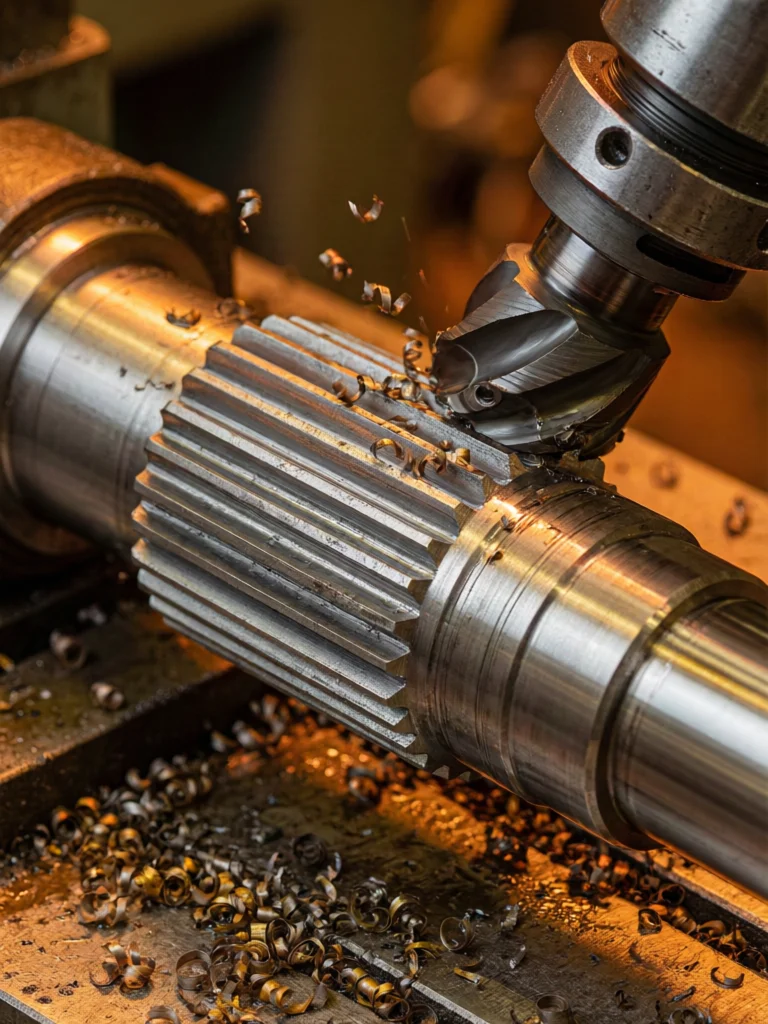
Internal and external spline generation on shafts using CNC milling and broaching for precise torque transmission fit.

5-Axis Housing Machining

5-Axis Housing Machining

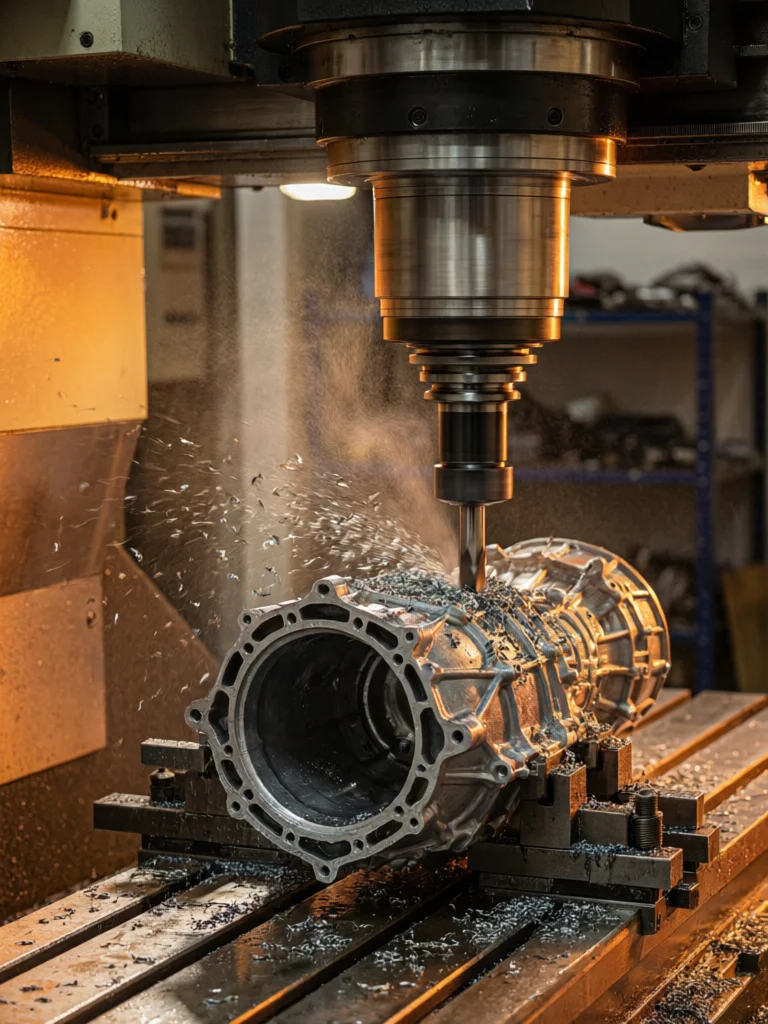
Single-setup 5-axis milling of gearbox cases with complex internal bearing bores, seal pockets, and mounting faces.

Precision Shaft Grinding

Precision Shaft Grinding

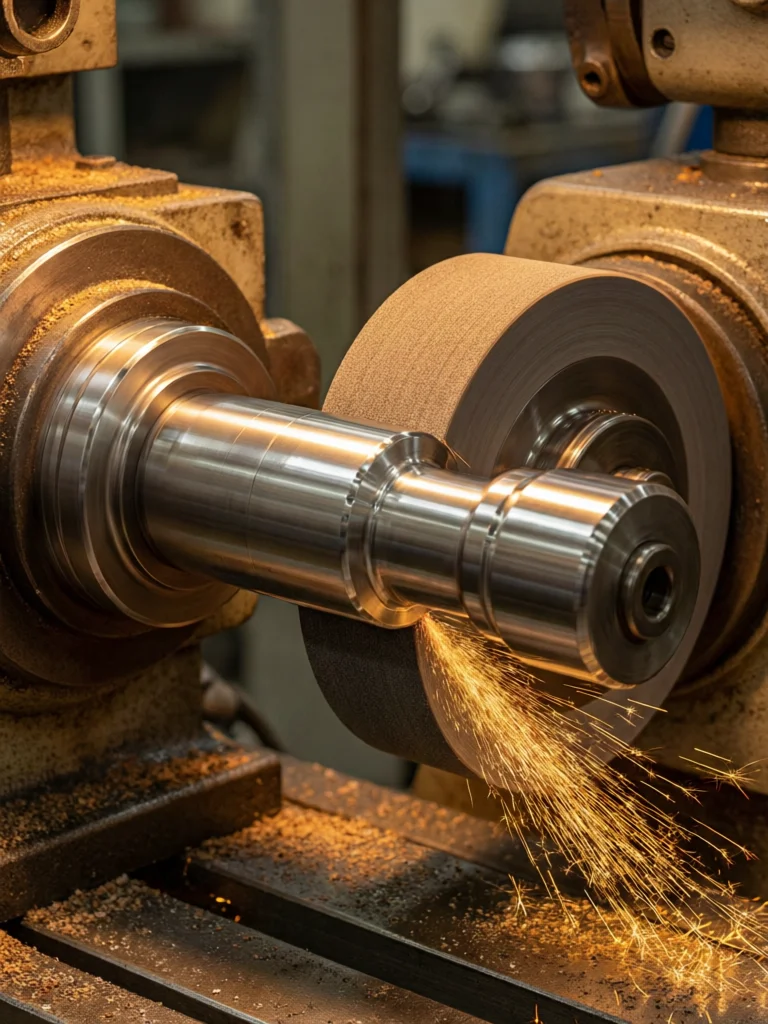
Cylindrical and centerless grinding for bearing journals and gear seats, achieving Ra 0.4μm and ±0.001mm roundness.

Case Hardening & Nitriding

Case Hardening & Nitriding

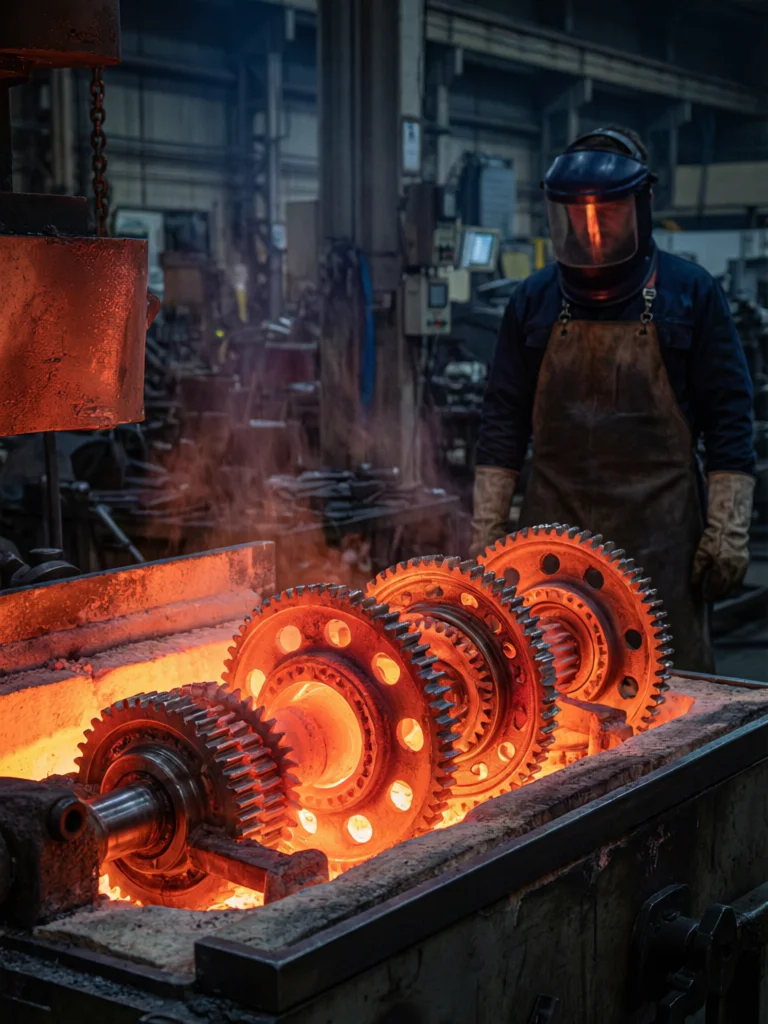
Controlled atmosphere carburizing and gas nitriding for gear teeth and selector mechanisms, with hardness testing per lot.

Gear CMM & Profile Inspection

Gear CMM & Profile Inspection

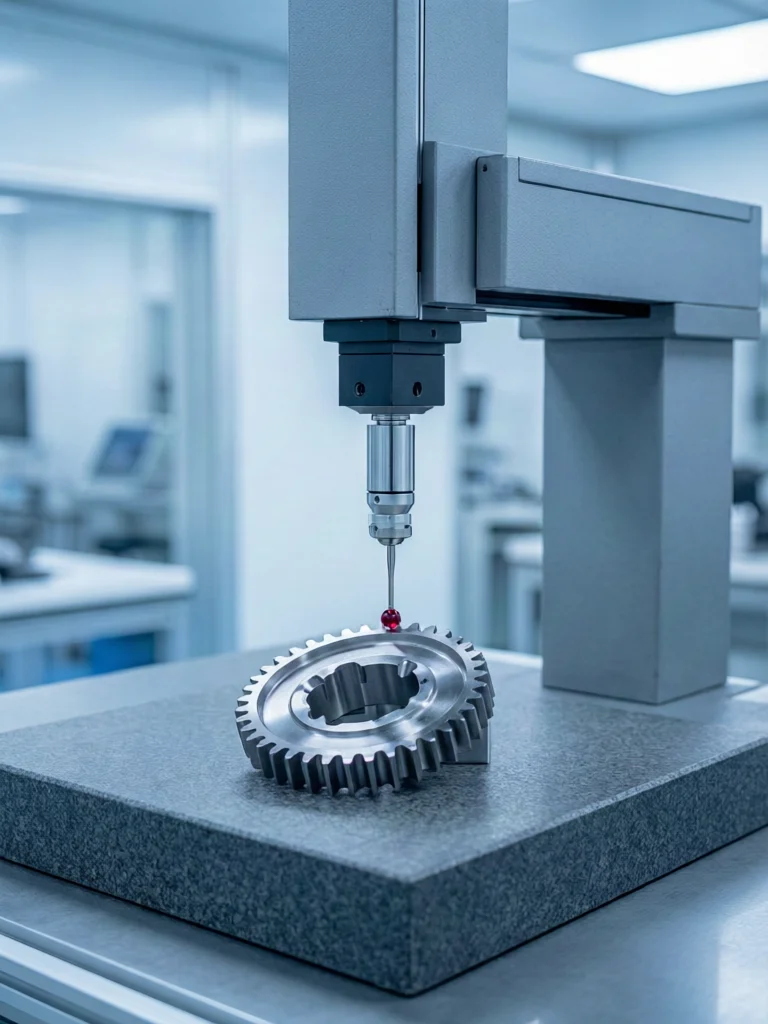
Coordinate measuring of tooth profile, lead, and pitch deviation; surface roughness verification on ground flanks.

Transmission Manufacturing Process

From gear design to assembly-ready components

01
Gear Design Review

Validation of module, pressure angle, helix angle, and backlash requirements before cutting.

02
Blank Preparation

Forged or cast blanks normalized and stress-relieved to minimize distortion during machining.

03
Rough & Finish Machining

Gear cutting, shaft turning, and housing milling with stock allowance for heat treatment.

04
Heat Treatment

Carburizing, hardening, and tempering of gears; nitriding of selector drums per specification.

05
Precision Finishing

Grinding of gear tooth profiles and shaft journals; honing of bearing bores to final tolerance.

06
Assembly Fit Check

Functional check of shaft stack-up, gear mesh backlash, and shift drum indexing before shipment.

Gearbox Components

01 Motorcycle transmission gears CNC machining

Transmission Gear Sets

±0.005mm

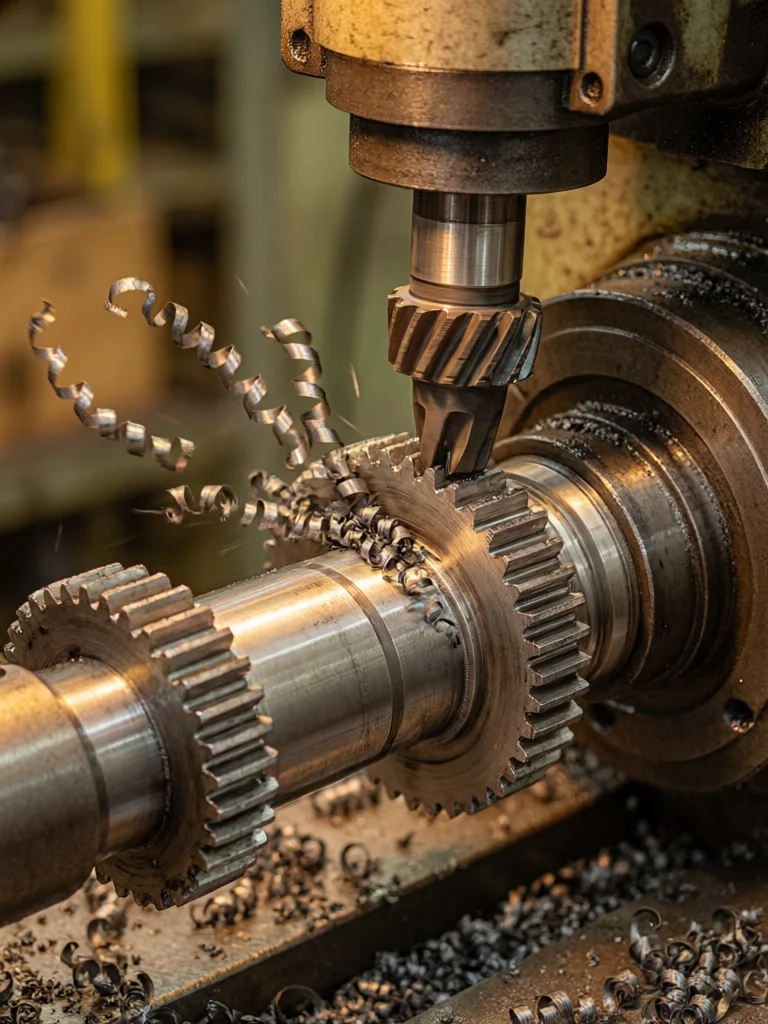
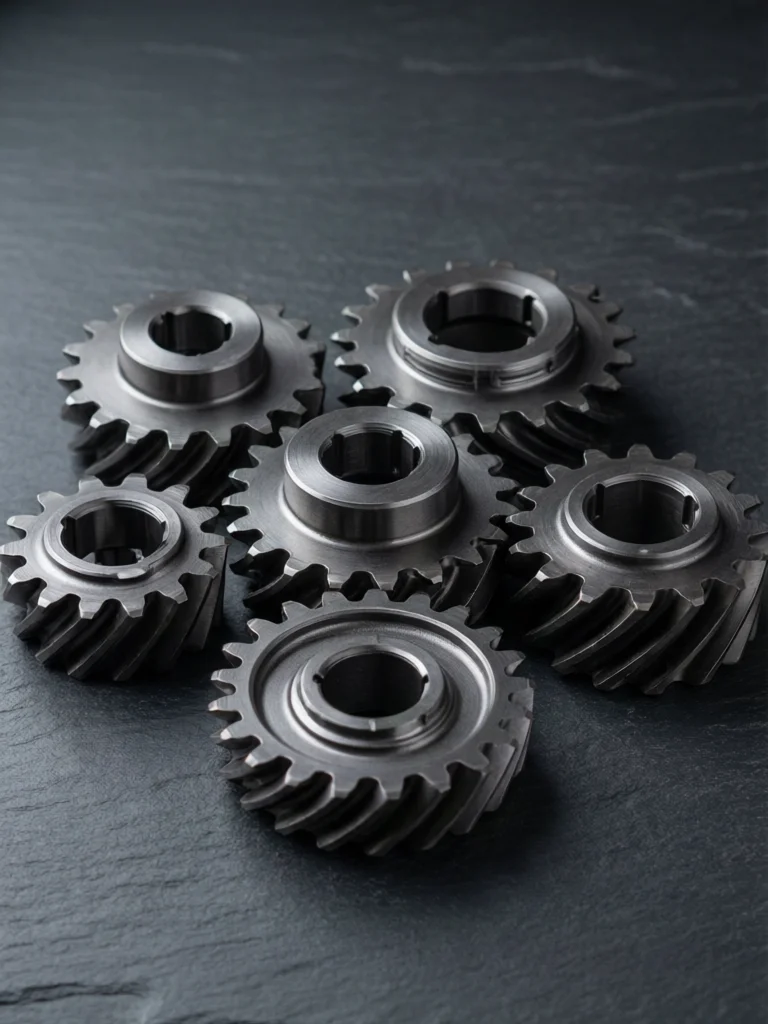
Constant-mesh spur and helical gear sets machined from alloy steel blanks. Gear hobbing and CNC milling produce tooth profiles with controlled module and pressure angle. Post-machining grinding achieves surface roughness Ra 0.4μm on tooth flanks. Case hardening increases surface durability while maintaining a ductile core for shock-load resistance.
Material4140 / 4340 Alloy Steel
FinishCase Hardening, Grinding
02 Motorcycle transmission shaft CNC machining

Main Shaft & Counter Shaft

±0.005mm

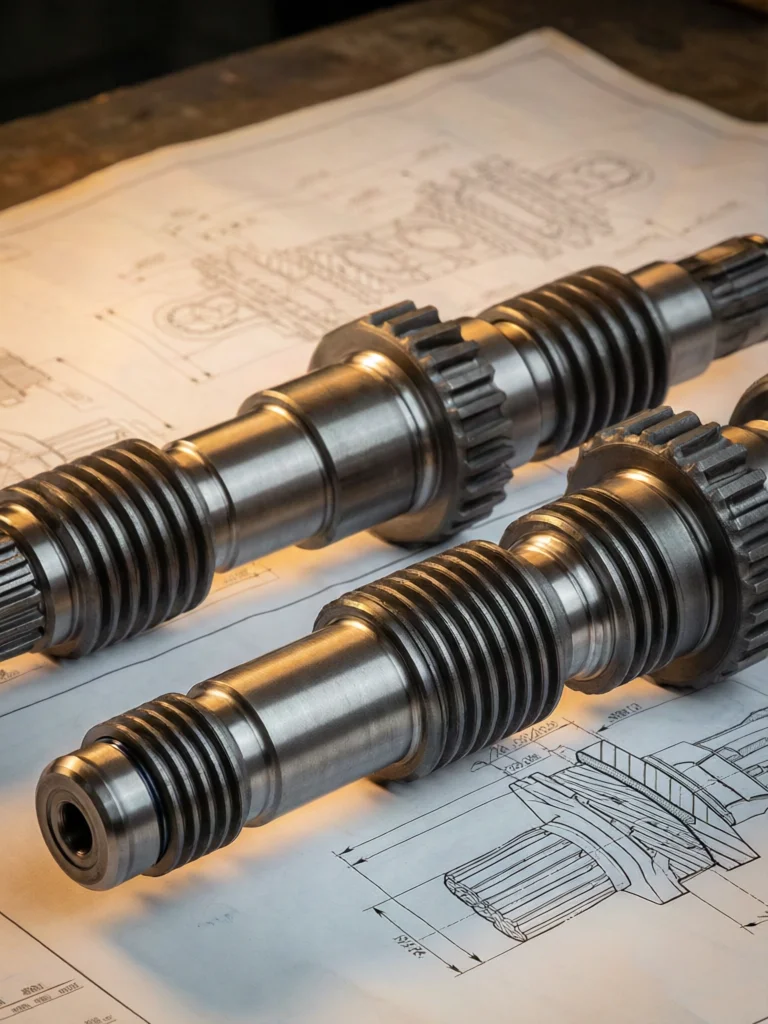
According to our CNC machining knowledge base, transmission shafts are rotating mechanical components designed to transmit power and rotational motion. CNC turning creates cylindrical forms and diameters. CNC milling machines keyways and splines for gear engagement. Precision grinding achieves tight tolerances on bearing journal surfaces. Heat treatment achieves required mechanical properties.

Material4340 / 8620 Steel
FinishHeat Treatment, Grinding
03 Motorcycle shift drum CNC machining

Shift Drum & Shift Forks

±0.005mm

Multi-axis CNC machined shift drums with precisely located cam grooves for reliable gear selection. Shift forks machined from aluminum or steel with hardened contact pads. Tolerances are held to ±0.005mm on groove spacing to ensure consistent shift feel and prevent premature wear of engagement dogs.

MaterialAlloy Steel / Aluminum
FinishHard Anodizing / Nitriding
04 Motorcycle gear selector mechanism CNC machining

Gear Selector Mechanism

±0.005mm

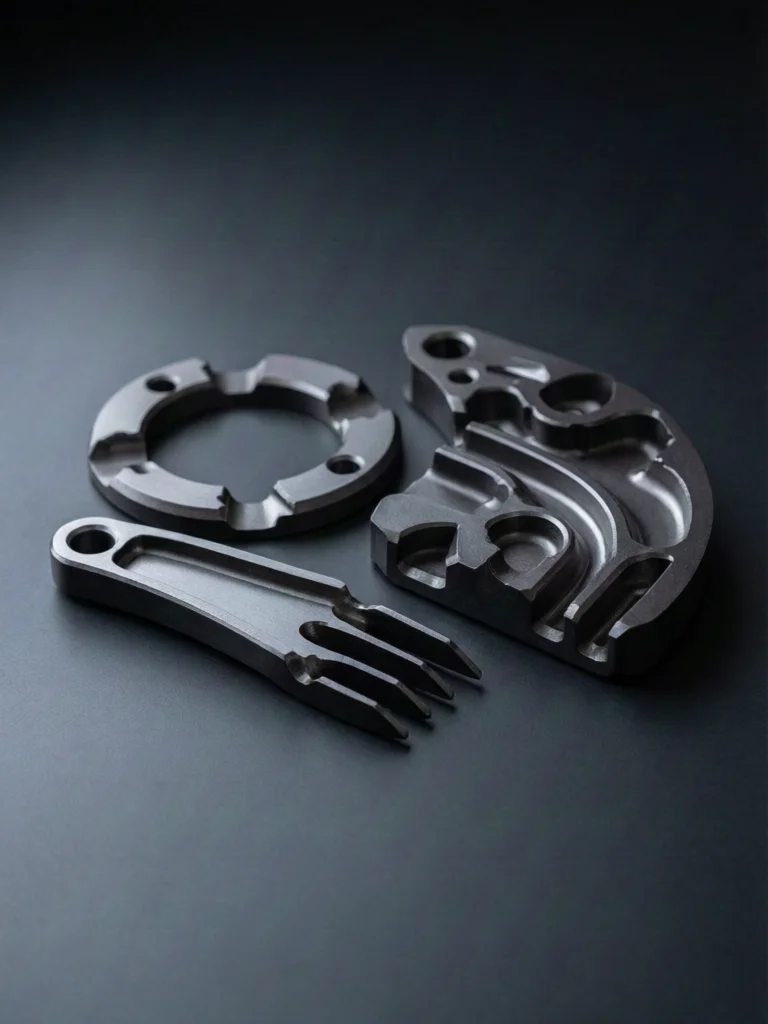
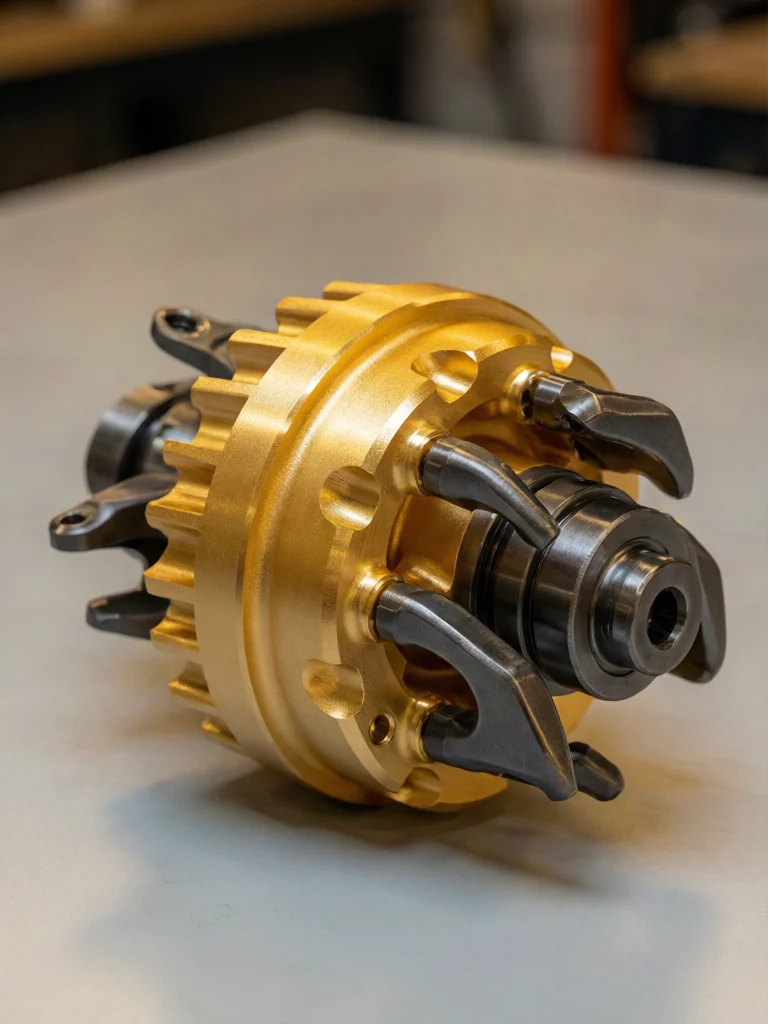
Ratchet mechanisms, selector drums, and detent stars machined to precise indexing angles for positive gear engagement. CNC milling produces ratchet tooth profiles with controlled backlash. Nitriding or hard anodizing provides wear resistance on high-cycle contact surfaces.

MaterialAlloy / Hardened Steel
FinishNitriding / Hard Anodizing
05 Motorcycle transmission housing CNC machining

Transmission Housing

±0.005mm

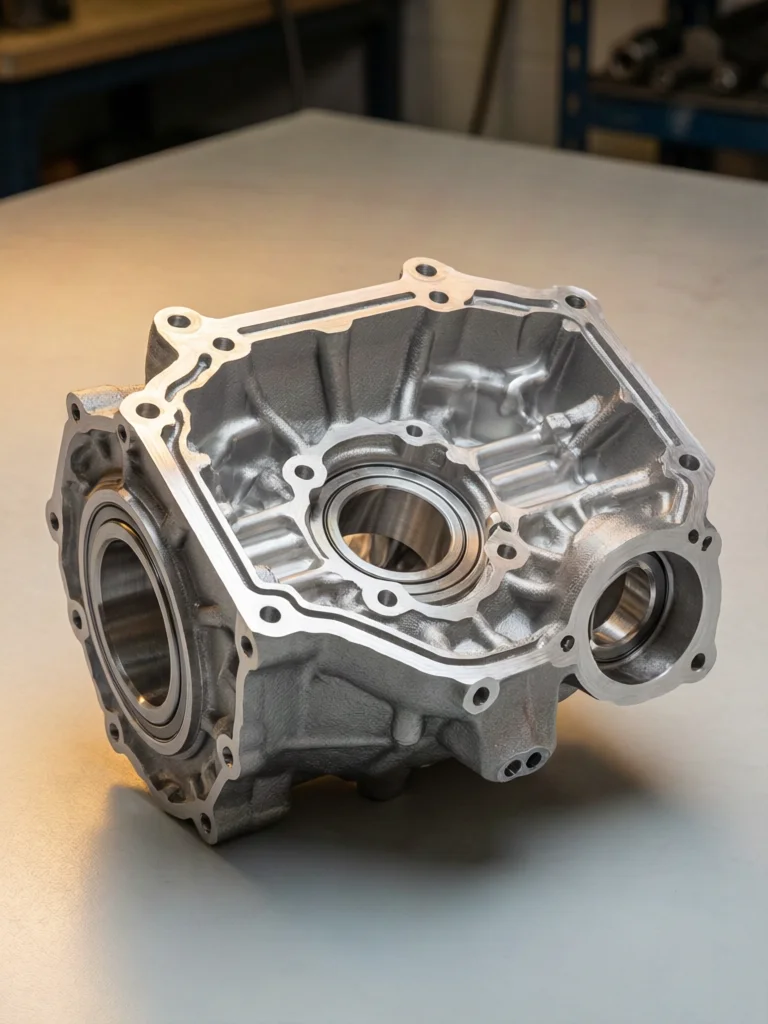
Gearbox cases machined from aluminum castings or billets. 5-axis simultaneous machining creates complex internal bearing bores, seal pockets, and mounting faces in a single setup. Dimensional control maintains bore positional tolerances within ±0.005mm to ensure proper gear mesh alignment and shaft parallelism.

MaterialA380 / ADC12 Aluminum
FinishHeat Treating / Anodizing
06 Motorcycle bearing retainers CNC machining

Bearing Retainers & Spacers

±0.005mm

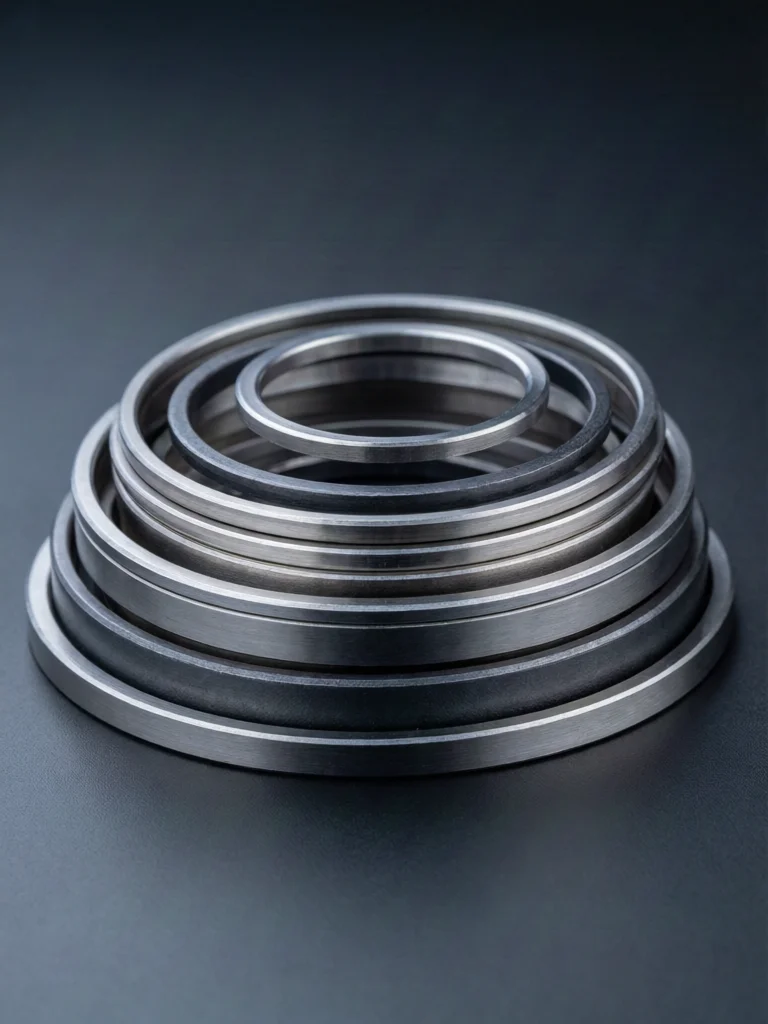
Precision CNC turned and milled bearing retainers, thrust washers, and spacing sleeves that maintain axial preload and shaft alignment. Tight tolerances on bore diameter and face parallelism prevent bearing skidding and premature failure. Passivation or anodizing provides corrosion protection in oil-wetted environments.

MaterialSS 303 Alloy Steel
FinishPassivation / Anodizing

Surface Finish Options

Hard Anodizing
Type III, 0.002" thick, MIL-A-8625
Wear & corrosion resistance for aluminum housings and shift drums
Electroless Nickel
0.0001–0.002" thick, AMS 2404
Uniform coating and hardness for steel shafts and selector parts
Passivation
Citric or nitric acid, ASTM A967
Stainless steel corrosion protection for bearing retainers
Powder Coating
Multiple colors, UV resistant
Durable cosmetic finish for external transmission covers
Case Hardening
Carburizing or nitriding, depth 0.5–1.5mm
Hardened gear tooth surfaces with ductile core
Precision Grinding
Ra 0.4μm, bearing quality finish
Reduced friction and stress concentration on shaft journals

Frequently Asked Questions

According to our CNC machining knowledge base, common materials for transmission shafts include carbon steel for general-purpose, cost-effective applications; alloy steel for high-stress and fatigue resistance; stainless steel for corrosion resistance; aluminum for lightweight housings; and titanium for high strength-to-weight ratio in premium components. Gear materials are typically 4140 or 4340 alloy steel, selected for torque capacity and wear resistance. Material selection depends on torque requirements, environmental conditions, weight constraints, and cost considerations.

According to our CNC machining knowledge base, primary processes for transmission shaft manufacturing include: (1) CNC turning to create the cylindrical form and diameters; (2) CNC milling for keyways, splines, and flats; (3) CNC grinding for precision finishing and tight tolerances on bearing surfaces; and (4) heat treatment (hardening, tempering) to achieve required mechanical properties. Additional operations may include drilling, threading, and surface treatments such as electroless nickel plating or passivation.

Standard machining tolerance for transmission components is ±0.005mm (±0.0002"). For precision-critical gear meshing applications, CNC Works AI achieves ±0.001mm (±0.00004") on ground tooth profiles. Gear quality parameters include module accuracy, pressure angle conformance, helix angle control, and surface finish Ra 0.4μm on tooth flanks. Every production lot is inspected on CMM with full dimensional reports provided.

According to our CNC machining knowledge base, post-processing operations for transmission components include anodizing (Type III hardcoat for aluminum and titanium), passivation for stainless steel and zinc alloys, electroplating for corrosion resistance and appearance, powder coating for wear resistance on all metals, and heat treatment (quenching, tempering, precipitation hardening, case hardening, stress relieving) to improve mechanical properties. Case hardening is specifically applied to gear teeth to increase surface hardness while maintaining a ductile core.

Common failure causes include fatigue from cyclic stress exceeding material endurance limit, excessive deflection causing misalignment and vibration, inadequate surface finish leading to stress concentration, and improper material selection for operating conditions. Prevention involves precise CNC machining to achieve proper tooth geometry and surface finish, correct material selection with appropriate heat treatment, and rigorous quality control including dimensional inspection, non-destructive testing, and dynamic balancing for high-speed shafts.

According to our CNC machining knowledge base, quality control for transmission shafts involves: (1) dimensional inspection using calipers, micrometers, and CMM for diameter, length, and geometric tolerances; (2) surface finish measurement using profilometers to verify Ra specifications; (3) hardness testing after heat treatment; (4) non-destructive testing (ultrasonic, magnetic particle) to detect internal or surface defects; and (5) dynamic balancing for high-speed shafts to minimize vibration. All inspections are documented per ISO 9001:2015 requirements.

Yes. Standard prototypes ship in 5–7 business days. Standard lead time is 7–15 days for samples and 25–45 days for bulk production depending on order volume. Production volumes of 1,000+ units typically deliver within 2–4 weeks depending on complexity. Automated pallet systems and quick-change tooling maintain efficiency at scale without sacrificing precision. Repeatability between parts is ensured through computer-controlled machine tools operating from validated G-code programs.

CNC Works AI is ISO 9001:2015 certified for quality management systems. The quality laboratory is equipped with CMM (Coordinate Measuring Machine), optical comparators, surface roughness testers, and hardness testers. Dimensional inspection reports, material certificates, and heat treatment records are provided with every production lot to ensure full traceability.

Technical Quotation

Upload STEP, IGES, or SolidWorks files for an instant AI-powered quote. Samples ship in 7–15 days; bulk production lead time is 25–45 days depending on order volume.

Request Technical Quote